









The Golden Visa is a way to obtain a residence permit by investing in the country’s economy. Portugal offers five investment options, the most popular being the purchase of investment fund units for €500,000. The processing time ranges between 8 and 10 months.
Let’s explore the benefits that attract people to the Portuguese program.
The Portugal Golden Visa overview
The Golden Visa is an attractive option for getting resident status in Portugal. It simplifies the process of moving to Europe and obtaining a Portuguese passport.
Other benefits of the Golden Visa include:
- travel opportunities;
- business opportunities;
- savings in Portugal and other EU countries;
- high-quality healthcare;
- prestigious education;
- low cost of living;
- safety and security;
- tax optimisation;
- profits from investments.
Investors who obtain Golden Visas are not required to reside in Portugal to maintain their status. They can also include their family members in their applications.
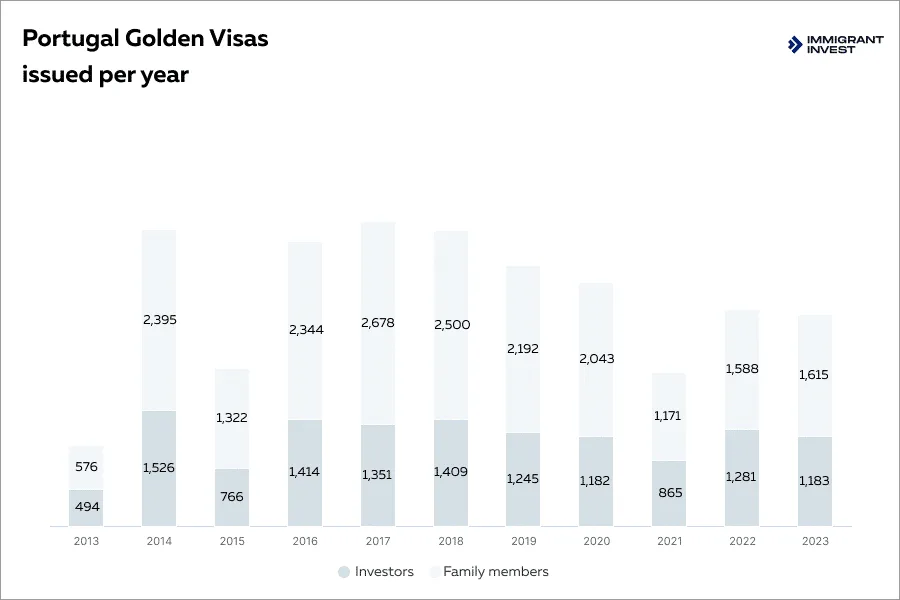
Over the past 10 years, approximately 12,700 investors have received Portugal Golden Visas, with more than 20,000 family members included in the applications.
Portugal introduced several changes to its Golden Visa program in 2023, prompting confusion about a possible shutdown. In fact, the program remains open: legacy applications are being processed and new ones are accepted. In 2024, approvals hit a record 4,987, a 72% year‑on‑year increase.
Possibility of moving to Europe
The Portugal Golden Visa allows you to legally move to Europe and spend as much time in the country as you wish.
Portugal boasts one of the highest standards of living in the world, ranking 20th in the Numbeo Quality of Life Index, surpassing both the UK and Canada.
Expats in Portugal enjoy proximity to the Atlantic Ocean, which offers ample opportunities for surfing and other water activities. Additionally, they relish the local cuisine and wines, as well as the warmth of the Portuguese people. The lifestyle in Portugal is relaxed, with a strong emphasis on family, friends, and enjoying life’s simple pleasures.

Trusted by 10,000+ investors
Check your eligibility for the Portugal Golden Visa
Travel opportunities
Portuguese residents can enter Portugal at any time and under any circumstances. For example, even if borders are closed to foreigners, those with residence permits are still allowed entry.
Portugal is also a member of the Schengen Area, so you can visit Schengen states visa-free. The Golden Visa allows you to stay in these countries for up to 90 days within a six-month period.
List of visa-free destinations for Portugal Golden Visa holders
Prospect of obtaining European citizenship
Getting a Golden Visa is a direct pathway to a Portuguese passport. Investors and their families can apply for permanent residence or citizenship after 5 years of residency.
Permanent residency in Portugal is not required to be eligible; spending just seven days per year in the country suffices. The five-year period begins immediately after the investor applies for a residence permit, not after they receive a card.
Portuguese citizens can legally reside in any European Union country and enjoy visa-free travel to 172 countries worldwide. This visa-free access extends beyond the Schengen Area to include major destinations like the USA, Canada, Australia, and the UK.
Business opportunities
Portugal provides a stable and secure environment for entrepreneurs, with legislation as predictable as in other European countries. The World Bank ranks Portugal 39th out of 190 countries for ease of doing business, and it stands at 34th out of 180 for business transparency.
As one of the world's 50 largest economies, Portugal's key sectors include services, ICT, automotive and components, electronics, energy, and pharmaceuticals.
Opening a business in Portugal offers an excellent entry point into the European market, thanks to its skilled labour force and relatively low real estate costs compared to other EU countries.
Launching a business is relatively straightforward, typically taking 2—3 days. Services are streamlined with single-window systems for company registration and numerous legal intermediary services available. Purchasing an existing business is also an option.

Parque das Nações is one of the main business districts in Lisbon, hosting over 2,200 companies including offices of major corporations such as Microsoft and Vodafone
Savings in Portugal and other EU countries
Upon obtaining the Portugal Golden Visa, investors can open a bank account in a Portuguese bank to manage funds in all major currencies. These accounts facilitate taking loans, transferring money, and conducting currency exchanges.
Banks in Portugal operate under the European Banking Authority’s regulations, ensuring transparency and efficiency within the EU banking system. Nationally, the Central Bank of Portugal maintains oversight.
Portuguese banks adhere to EU Regulation 2016/679 and Portuguese Data Protection Law 58/2019, which safeguard the confidentiality of personal data.
Foreigners with Portuguese residence permits find it easier to open bank accounts in other EU countries. The process is simplified as banks require fewer documents, process applications more quickly, and there is a reduced risk of refusal.
High-quality healthcare
Portugal allocates about 10% of its GDP to healthcare, ranking it 19th globally according to Numbeo, surpassing countries like Germany, Sweden, and Canada. This investment results in high-quality and accessible medical services, contributing to an average life expectancy of 81 years.
The Portuguese healthcare system includes a comprehensive network of public, social, and private hospitals throughout the country. All residents and citizens have access to public hospital services; healthcare is free for minors and seniors over 65, while others pay affordable rates.
Numerous private clinics offer a high level of care with English-speaking staff. Many clinics are enhancing accessibility by launching apps and telemedicine services.
High-class education
Portugal's education system is structured in three tiers:
- Pre-school — optional for children aged 3 months to 5 years.
- School — mandatory for children starting at 6 years old.
- Higher education — optional and divided into colleges and universities. Colleges offer licences or bachelor’s degrees, while master’s degrees are exclusively obtained at universities.
There are both public and private options in higher education, with tuition fees varying based on the institution, education level, and field of study.
The most affordable institutions, such as the Polytechnic Institute of Bragança or the University of Beira Interior, have an average annual tuition cost between €1,000 and €2,000. In contrast, tuition at prestigious universities can exceed €12,000 per year.
Programs taught in English typically incur higher fees than those in Portuguese, and international students generally face higher tuition rates than local and EU students.
Portugal boasts over 130 universities with diplomas recognized across the EU, facilitating employment opportunities abroad for graduates. Five Portuguese educational institutions rank in the top 500 globally:
- University of Lisbon;
- Universidade Nova de Lisboa;
- University of Porto;
- Universidade de Combria;
- Universidade de Aveiro.
Foreigners with residency in Portugal can qualify for free tuition if they have lived in the country for two years and pass their exams successfully.
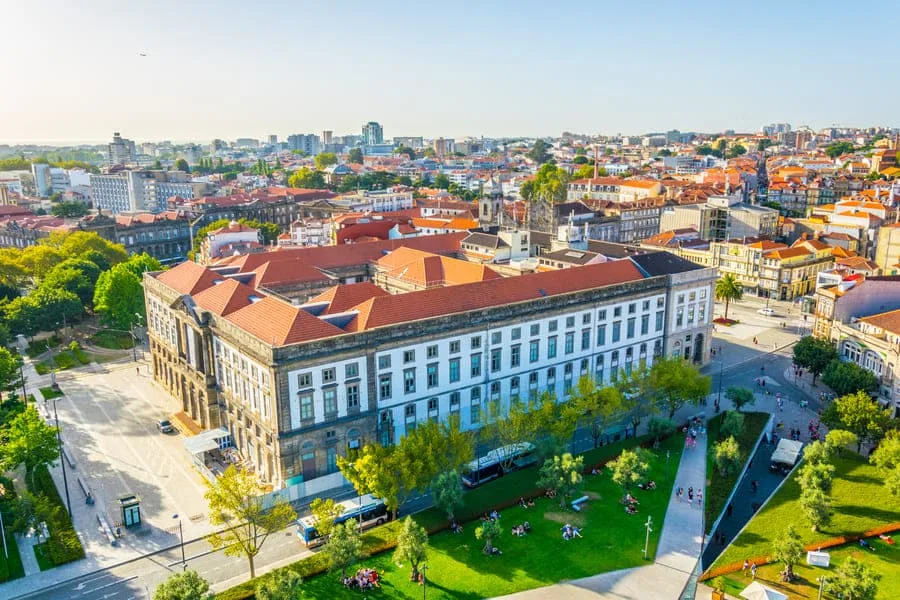
The University of Porto, one of Portugal's most prestigious higher education institutions, comprises 14 faculties
Low cost of living
Portugal's cost of living is notably lower than that of neighbouring countries like Italy and Spain, and significantly more affordable than in Austria, Switzerland, or England.
On average, a single person requires about €650 per month, excluding rent, to maintain a moderate lifestyle in Portugal. For comparison, the equivalent costs in Italy and Spain are approximately €850 and €700 per month, respectively.
Renting an apartment in Portugal typically costs between €700 and €1,500, varying by size and location.
Lisbon and Porto are Portugal’s largest and most expensive cities. However, Porto is more affordable than Lisbon; for instance, rental prices in Lisbon are nearly twice as high as those in Porto.
Safety and security
Portugal is widely recognized as a safe country for both visitors and residents, ranking as the 7th safest country globally according to the 2023 Global Peace Index by the Institute for Economics and Peace.
The country's crime rate is notably low, ranking higher than Norway, Spain, and Hungary. The most prevalent crimes involve corruption and bribery, while violent crimes and property thefts are comparatively rare. Lisbon is acknowledged as the safest city in Portugal.
Portugal is also known for its political stability. The Global Economy magazine, which assesses factors like armed conflict, social unrest, international tensions, terrorism, and other violence, places Portugal among the top 50 most politically stable countries.
Comfortable climate
Portugal generally enjoys a pleasant climate, though regional variations exist. The south tends to be warmer, while the northwest experiences more rainfall.
August is the warmest month, with average temperatures around +28°C. Water temperatures are most comfortable in August and September. The coldest months are January and February, with average temperatures ranging from 5 to 10°C. Temperatures rarely fall below 0°C, and snow is uncommon.
Rich culture and natural wonders
Portugal boasts a deep historical heritage that stretches back to Roman times and includes significant Moorish and Christian influences. These eras have profoundly shaped the country's architecture and traditions. Noteworthy historical landmarks include the Tower of Belém and Jerónimos Monastery, both UNESCO World Heritage Sites.
Portugal is also home to breathtaking natural sites such as the Douro Valley, Algarve Coast, Peneda-Gerês National Park, Ria Formosa, and Serra da Estrela.

Jerónimos Monastery, located in Lisbon, now houses the Maritime Museum and the Museum of Archaeology
Profits from investment
Applicants of the Portugal Golden Visa can see profitable returns from purchasing investment fund units, typically within 6 to 10 years, with annual yields ranging from 3 to 10%. In certain instances, an additional return of 5 to 8% is possible.
Portuguese investment funds offer opportunities to diversify portfolios across various projects, including renewable energy infrastructure, entertainment projects, and football clubs.
Favourable tax system
Portugal offers the Non-Habitual Resident (NHR) status, valid for 10 years, to certain professionals such as university professors, research scientists, and qualified employees of designated startups, provided they reside in Portugal for more than 183 days annually.
The benefits of the NHR status are:
- no tax on self-employed income and dividends;
- no tax on foreign-sourced income;
- 10% tax on pension payments from abroad;
- 20% tax on income earned in Portugal.
The standard income tax is progressive, for example, 14.5% for income under €7,112 and 23% for income ranging from €7,112 to €10,732. The highest rate is 48%, with an additional 5% surcharge for income exceeding €250,000 per annum.
Portugal has Double Tax Avoidance Agreements with 78 countries, including India, France, Canada, and China.
Residence permit for family members
Investors in the Portugal Golden Visa program can include family members in their application. Eligible family members include:
- a spouse, regardless of sex;
- children under 26 years old;
- financially dependent parents of any age.
No residency requirements
Portugal Golden Visa holders are not required to live permanently in Portugal to maintain their status. They need only spend 7 days per year in the country. This minimal presence requirement also applies to those seeking Portuguese citizenship, provided they maintain resident status and renew their residence permits regularly for 5 years.
In contrast, individuals with non-investment residency must live continuously in Portugal for five years before they can apply for citizenship.
7 disadvantages of the Portugal Golden Visa
1. Elimination of real estate options. As of October 2023, the Portuguese authorities removed the real estate investment option from the Golden Visa program. Investors can now qualify for residence permits by purchasing investment fund units, supporting arts and heritage, funding research projects, or investing in a business and creating at least 5 jobs.
2. Lengthy application process. The process to obtain the Portugal Golden Visa takes a minimum of 8 months and can extend up to 1.5 years.
3. Investment required pre-approval. The Portuguese authorities accept applications only after the candidate has made an investment. It is essential to provide documents that prove the investment was made.
4. Strict Due Diligence. Before granting the Golden Visa, Portuguese authorities scrutinise the applicant and their family members against various international databases and on the internet. This process takes several months.
5. Requirement to visit Portugal during the application process. After successfully passing Due Diligence, the investor must travel to Portugal to submit original documents and biometrics. Family members included in the application are also required to visit Portugal.
6. Limited opportunity for tax optimisation. In addition to changes in investment options, Portuguese authorities have restricted access to the Non-Habitual Resident status to a majority of investors.
Now, only university professors, research scientists, and qualified employees of projects classified by the Portuguese government as "startups" are eligible for this status and its benefits. All others are subject to the standard tax rate.
7. Return on investment is not guaranteed. The only investment option that guarantees a return of funds is the purchase of investment fund units. Although applicants who establish companies can sell them later, the return on investment process is more complex and depends solely on the investor. Contributions to the arts, cultural heritage restoration, and research activities are non-refundable.
Ways of obtaining a Portugal Golden Visa
Applicants must meet the program conditions, be older than 18 years, and have no criminal records or communicable diseases deemed a public health risk, such as HIV.
Investors can include family members in their applications, such as spouses, children under 18, financially dependent children aged 18 to 26, and parents.
5 investment options under the Portugal Golden Visa program
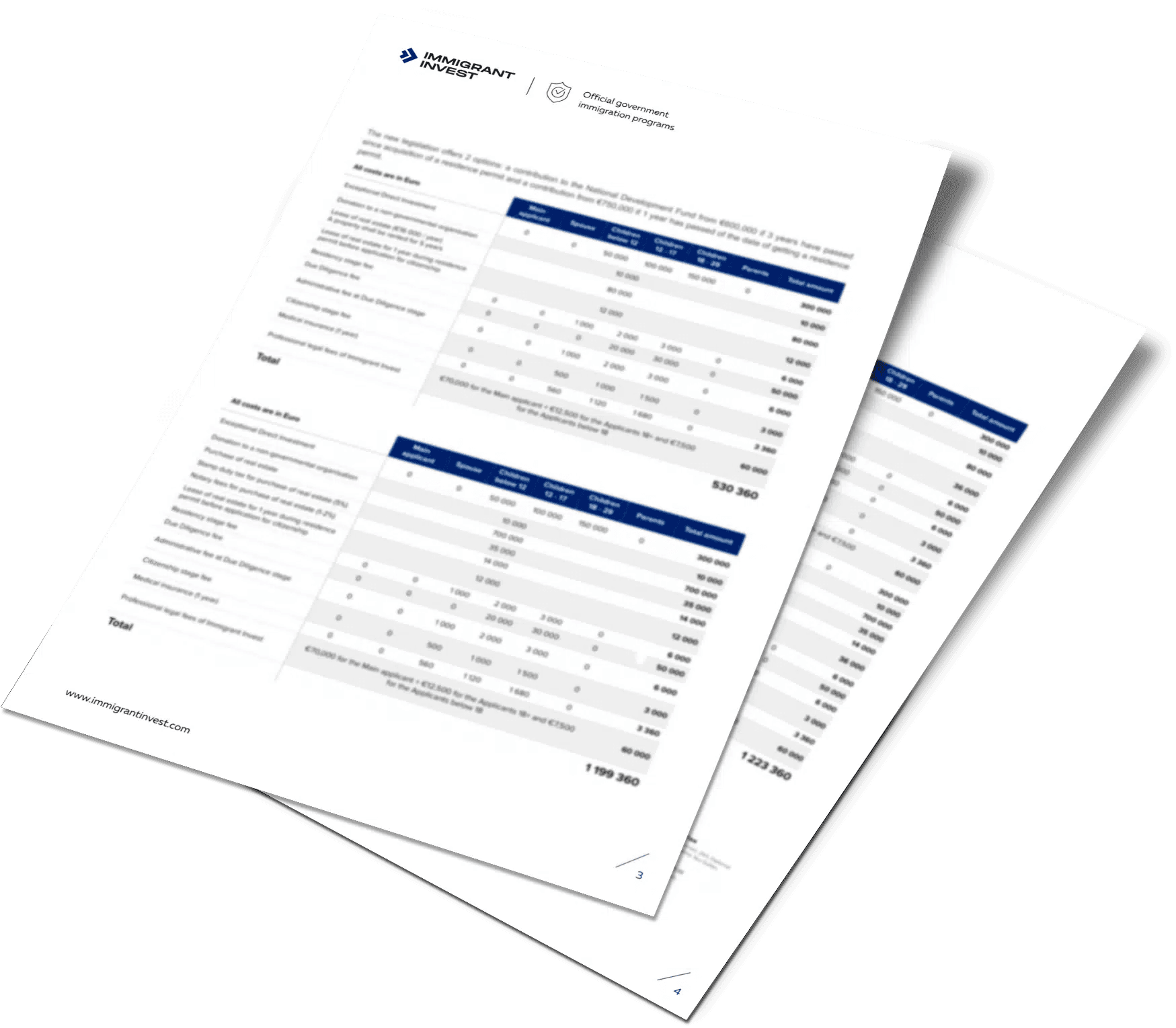
Every option requires additional expenses for legal support, administrative fees, and insurance. Investors must pay €5,812 per person for the issuance of a residence permit card and €582 per person for application processing.
The most popular option involves purchasing investment fund units, as this allows for a return on investment and profit.
How to obtain a Portugal Golden Visa: a step-by-step procedure
The process of obtaining a Portugal Golden Visa consists of 7 steps and lasts at least 8 months.
1 day
Preliminary Due Diligence
Preliminary due diligence is conducted by the Compliance Department to identify potential risks of refusal. Our Anti Money Laundering Officer assesses the investor and, if issues arise, suggests solutions.
We only sign the contract after completing this preliminary check.
Preliminary due diligence is conducted by the Compliance Department to identify potential risks of refusal. Our Anti Money Laundering Officer assesses the investor and, if issues arise, suggests solutions.
We only sign the contract after completing this preliminary check.
1—2 weeks
Obtainment of a tax number
The investor obtains a Número de Identificação Fiscal (NIF), necessary for opening bank accounts, transferring money, or registering a business.
The investor obtains a Número de Identificação Fiscal (NIF), necessary for opening bank accounts, transferring money, or registering a business.
1—1.5 months
Opening a bank account
Following the issuance of the NIF, Immigrant Invest assists the investor in opening and activating a bank account, as the program requires investments to be made from a Portuguese bank.
Following the issuance of the NIF, Immigrant Invest assists the investor in opening and activating a bank account, as the program requires investments to be made from a Portuguese bank.
2—3 weeks
Fulfilment of investment requirement
Once the bank account is active, the investor transfers their funds and makes the investment. Subsequently, our lawyers gather all documents proving the fulfilment of the investment conditions.
Once the bank account is active, the investor transfers their funds and makes the investment. Subsequently, our lawyers gather all documents proving the fulfilment of the investment conditions.
5—6 months
Preparation of documents and application
Our lawyer provides the investor with a list of required documents, assists in filling out government forms, and helps translate and notarize the papers. The documents are then sent to the AIMA, Agency for Integration, Migrations, and Asylum of Portugal.
Our lawyer provides the investor with a list of required documents, assists in filling out government forms, and helps translate and notarize the papers. The documents are then sent to the AIMA, Agency for Integration, Migrations, and Asylum of Portugal.
1—2 weeks
Submission of biometrics
The investor and their family members included in the application travel to Portugal to submit original documents and fingerprints. An appointment for biometric collection must be scheduled in advance online.
The investor and their family members included in the application travel to Portugal to submit original documents and fingerprints. An appointment for biometric collection must be scheduled in advance online.
6—8 months
Approval and obtainment of the residence permit cards
Once the AIMA approves the application, the investor pays the fees for the residence permit cards, which can be collected in person or via a lawyer by proxy.
The residence permit is granted for two years and requires the investor to spend at least seven days per year in the country to maintain their status. To renew the residence permit, the investor must repeat the initial procedure.
Once the AIMA approves the application, the investor pays the fees for the residence permit cards, which can be collected in person or via a lawyer by proxy.
The residence permit is granted for two years and requires the investor to spend at least seven days per year in the country to maintain their status. To renew the residence permit, the investor must repeat the initial procedure.
Key takeaways
- The Portugal Golden Visa offers numerous benefits, including the possibility to relocate to Europe and obtain European citizenship, visa-free travel within the Schengen Area, and opportunities to manage savings in EU banks and establish international businesses.
- Living in Portugal is advantageous due to its high-quality healthcare and education, low cost of living, and the country's overall safety.
- The Golden Visa program is appealing for its potential investment returns, lack of residency requirements, and the ability to secure residence permits for close family members.
- However, there are some drawbacks, including the elimination of the real estate investment option, a lengthy application process, the prerequisite of making an investment before approval, the necessity of visiting Portugal, stringent Due Diligence measures, and limited options for guaranteed investment returns.

 Trusted by 10,000+ investors